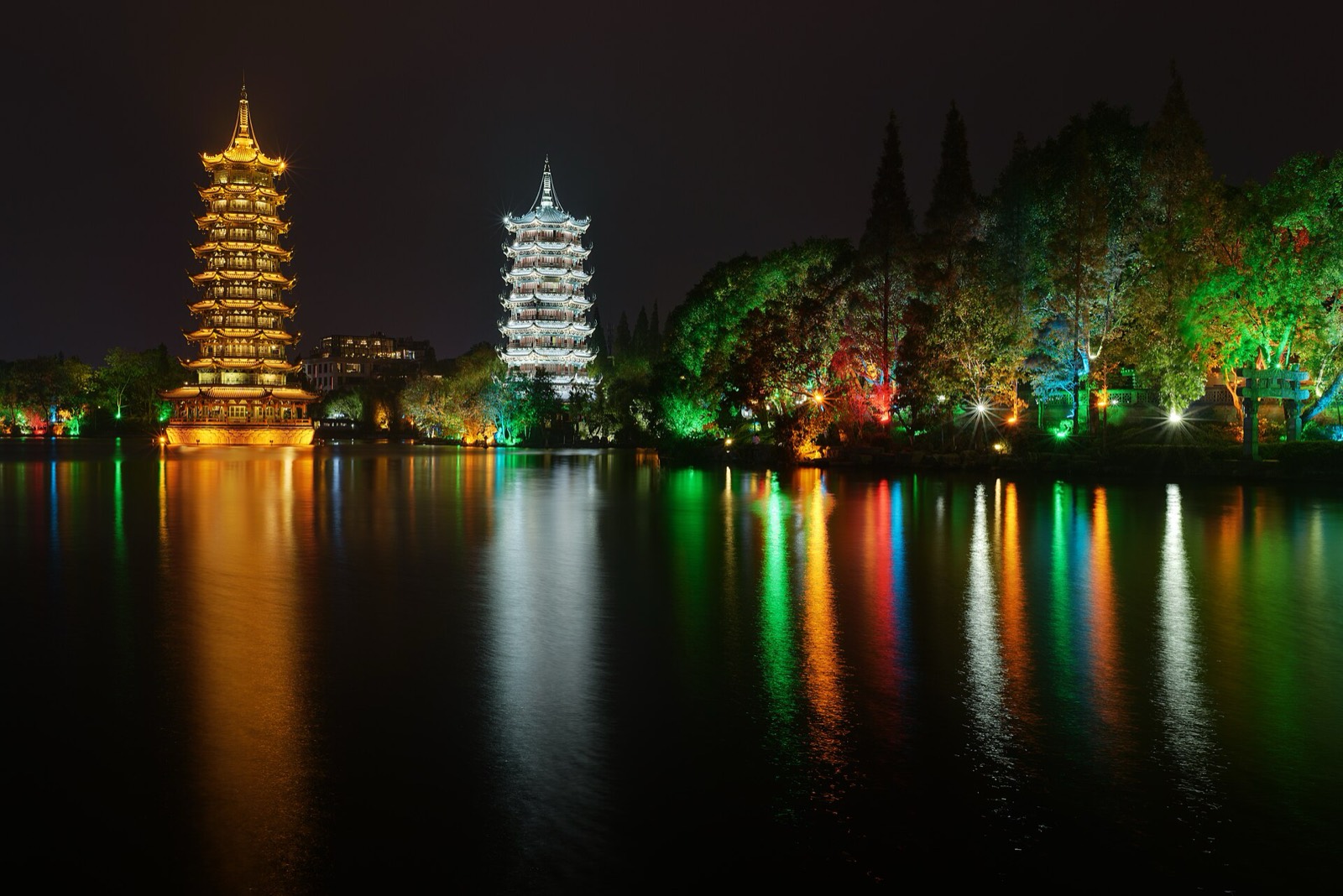
Locations that earn the early alarm
Great Wall at Mutianyu or Jinshanling for sunrise; Huangshan’s Sea of Clouds after rain; Yuanyang and Longji rice terraces in January–March for water mirrors; Zhangjiajie’s pillars when fog lifts; Shanghai’s Lujiazui from the Bund at 18:30; and Xiapu’s mudflats in Fujian for tides at dawn. Avoid midday light and the haze of June–August.
Drone and tripod rules
Drones above 250 g need registration, and most cities and all airports ban them without a permit — including Beijing, Shanghai and the Great Wall. Scenic areas often forbid them entirely; fines run ¥500–2,000 and confiscation is possible. Tripods are usually fine outdoors but banned in museums and some temples. A compact travel tripod avoids most problems.
Photographing people and places
Ask before portraits — a smile and pointing at your camera works better than words. Some temples forbid photographing statues, and monasteries in Tibet and Qinghai often ban photography in halls. Never photograph police, military vehicles, checkpoints or airport security; delete the image if challenged. In ethnic regions, a small purchase from a market stall usually opens the door to a portrait.
Common questions
Can I bring a drone to China?
You can bring it, but flying needs registration and often a permit that tourists rarely obtain. Most cities, airports, scenic areas and all of Beijing are effectively no-fly. Bringing a drone without a clear plan usually means carrying dead weight.
Is photography allowed in Chinese museums and temples?
Usually without flash and without tripods. Some halls with Buddhist statues prohibit photos entirely, and staff will point at a sign or ask you to stop. When in doubt, look for the crossed-out camera symbol at the entrance.
Official sources
- China Meteorological Administrationlight and weather windows
Tours
Written and re-verified by our local team.