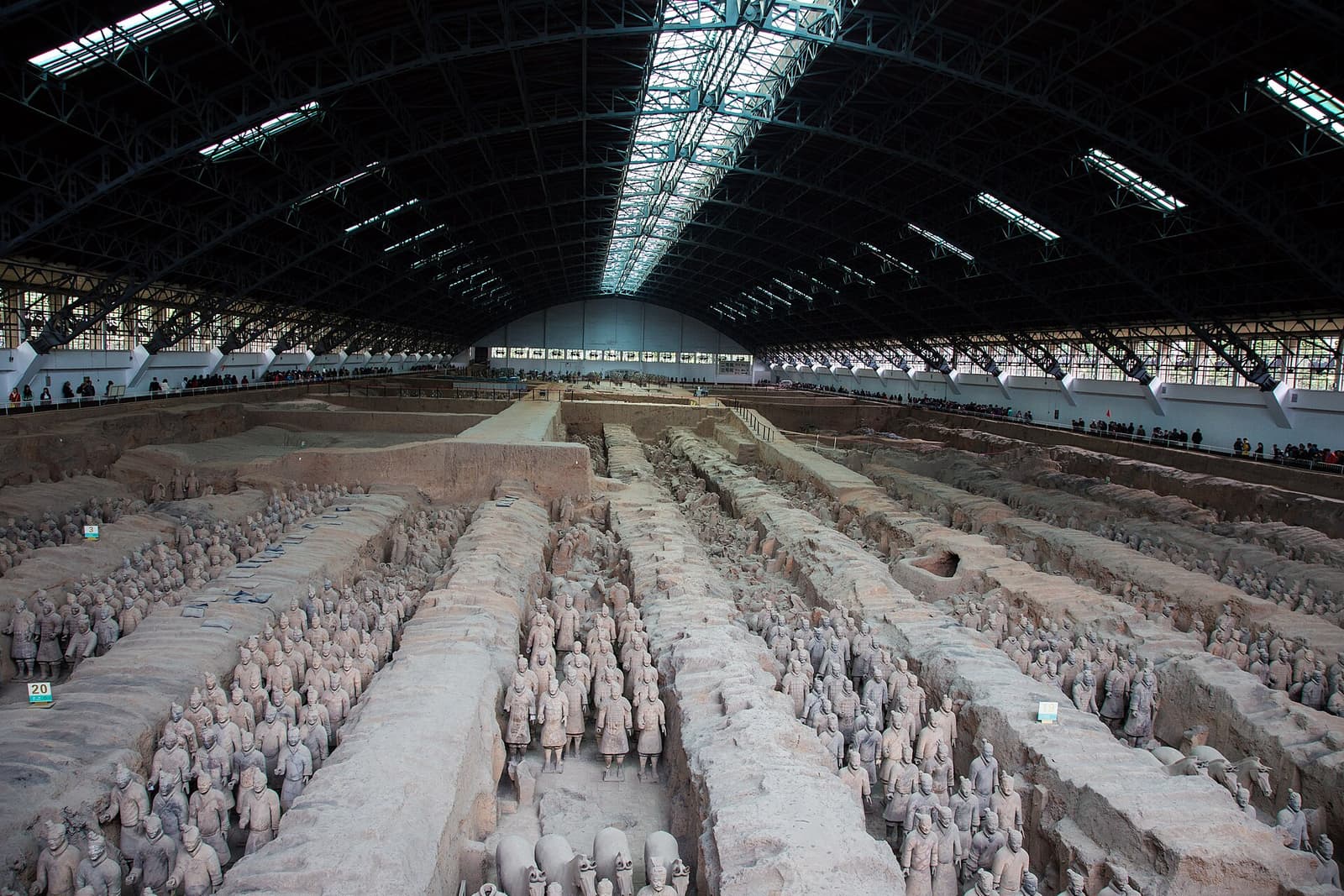
China’s story was written in its capitals. Xi’an held the Qin, Han and Tang; Luoyang the Buddha-haunted heart of the Northern dynasties; Beijing the Ming and Qing. This journey follows that line through the sites and museums where the archaeology actually happened, so the names in the textbooks become places you can stand in.
What you’ll experience
- Stand in the pits of the Terracotta Army in Xi’an and trace the Qin empire through its own weapons and ranks
- Walk the Longmen Grottoes at Luoyang, where 100,000 Buddhist figures were carved into the cliffs over four centuries
- Visit Baima Temple, China’s first Buddhist temple, and hear how the faith travelled the Silk Road
- Cross the Forbidden City and the Ming tombs in Beijing with a historian, ending on the Great Wall
Who it’s for
For history and archaeology lovers who want to turn the textbook into a place they can walk through.
A sample day
- 08:00 — Breakfast, then a guided morning at a major archaeological site before the tour buses arrive.
- 11:30 — A museum visit with a specialist, focused on the objects that explain what you just saw.
- 13:00 — Lunch at a local restaurant, then a slower afternoon in an old quarter or a second site.
- 19:30 — Dinner and an informal talk on the dynasty you have been walking through.
Questions about this theme
Do I need to know Chinese history first?
Not at all — our guides are historians who build the story from the ground up. If you already know the dynasties, tell us and we will go deeper into the archaeology and the politics.
How much walking is involved?
Sites like the Forbidden City and Longmen involve two to four hours on foot, mostly flat. We pace the days, use shaded routes in summer and can arrange a vehicle or wheelchair where needed.
Are the museums and sites suitable for children?
Yes — we run a family version with treasure-hunt style activities, shorter visits and hands-on workshops such as rubbing a stele or casting a small bronze.