For two thousand years the Silk Road carried silk, faith and languages between East and West. This journey follows that corridor through the heart of China, where Han, Hui, Uyghur and Tibetan cultures still meet at the desert's edge.
What you’ll experience
- Stand before the Terracotta Army in Xi'an and climb the Giant Wild Goose Pagoda where Tang monks translated the sutras
- Learn to hand-pull biáng biáng noodles with a Hui master in a Xi'an back-alley kitchen
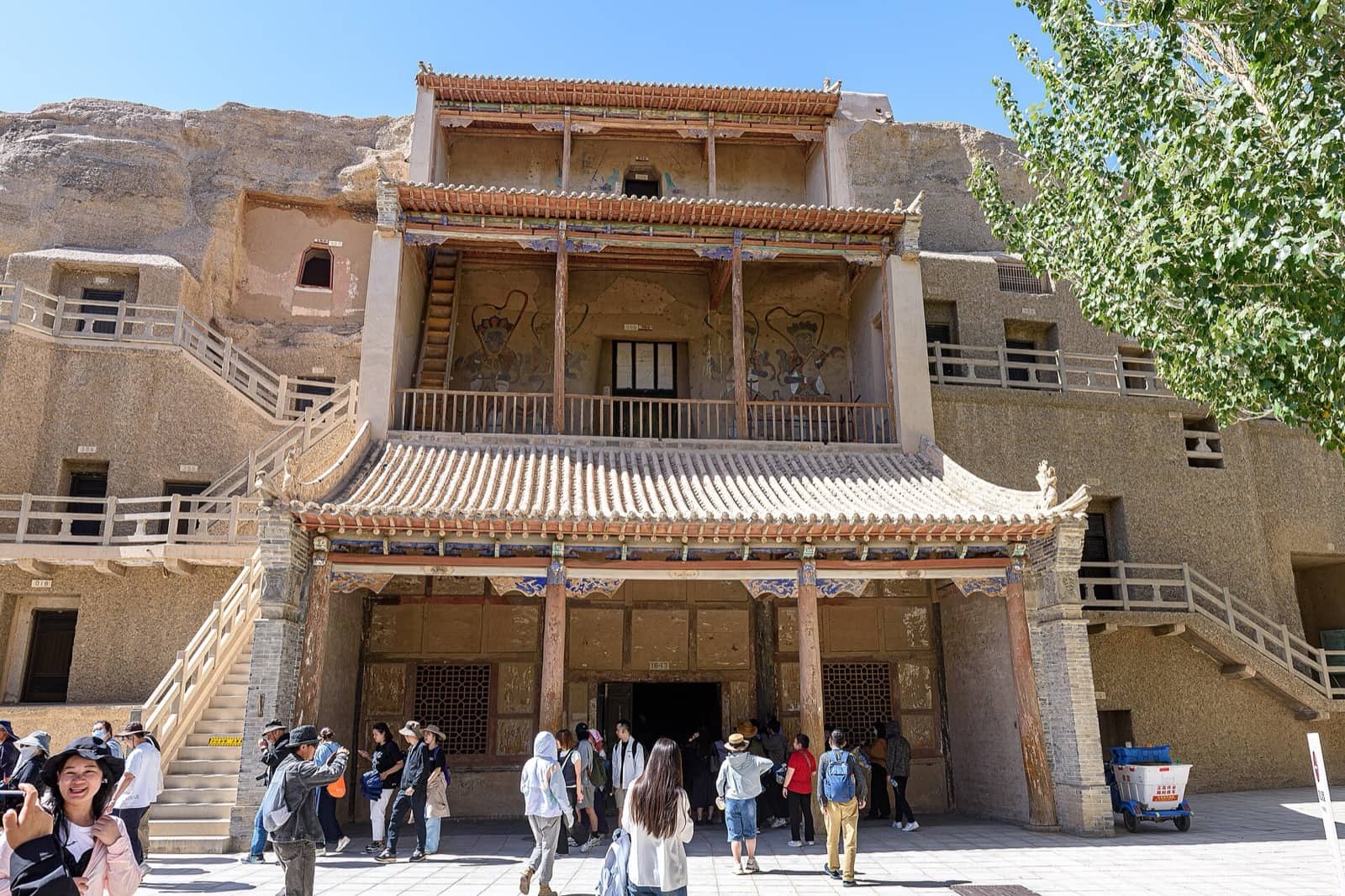
- Spend a full day inside the Mogao Caves at Dunhuang, reading a thousand years of Buddhist mural art by lamplight
- Wander the mud-brick lanes of Kashgar's old city and barter in the Sunday livestock bazaar
Who it’s for
For history lovers, photographers and curious travellers who want China beyond the megacities.
A sample day
- A morning at a Silk Road site — caves, ruins or a museum with a specialist guide.
- An afternoon transfer along the old corridor, with stops at beacon towers and desert oases.
- An evening in a caravan-town old quarter: noodles, dried fruit and the local night market.
- An optional star talk under some of China's darkest skies.
Questions about this theme
How far does the Silk Road route go?
Our core is Xi'an–Dunhuang–Turpan–Kashgar, covering the eastern and central corridor. The full route runs 4,000 km — we fly the long legs and drive the interesting ones.
Is the far west safe for tourists?
Yes — the areas we visit are stable and used to visitors, with checkpoints on the roads. We monitor official advice daily and adjust routes if anything changes.
What is the accommodation like in the desert towns?
Comfortable and local: four-star hotels in Dunhuang and Turpan, family guesthouses in Kashgar's old quarter. Hot, reliable showers everywhere.