At the table: the lazy Susan, chopsticks and toasts
Meals are where Chinese hospitality shows. If there is a lazy Susan, turn it clockwise and only after others have served themselves; never spin it while someone is reaching. Use the serving chopsticks (gongkuai) when they are provided, and never stand your own chopsticks upright in rice — it mimics incense for the dead. The host orders more food than the table can finish; that surplus is the compliment, so leave a little on your plate. When someone proposes a toast, ’ganbei’ means bottoms up, but you can sip instead and no one will force you. At business or family dinners the host usually pays and will refuse your money; offer once, sincerely, then let it go. If whole fish is served, the head points at the guest of honour — do not turn the fish over yourself.
Temples, photos and other people’s space
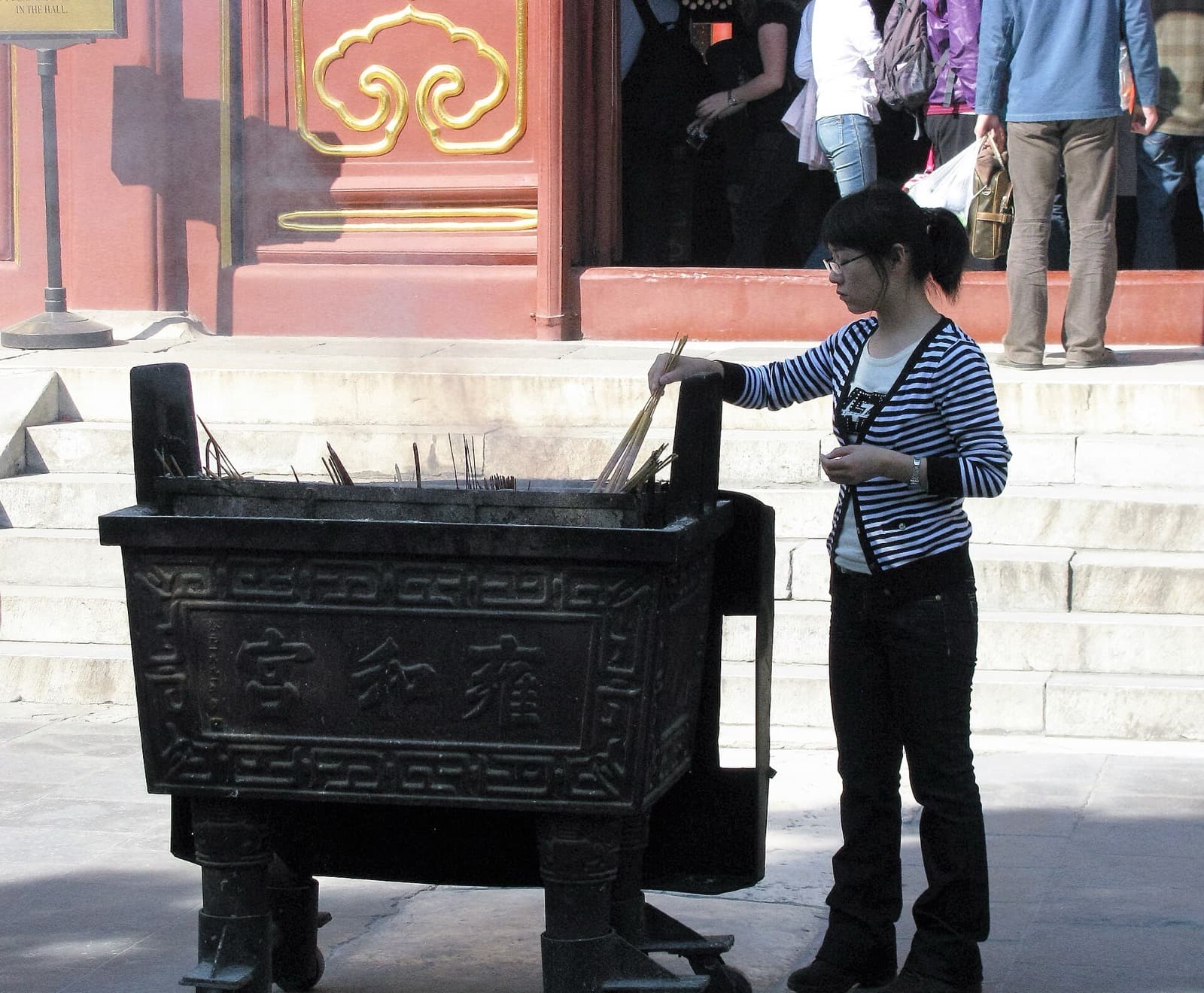
In temples, dress with shoulders and knees covered, walk clockwise around halls and stupas, and never point your feet at a Buddha statue. Photography is often banned inside halls — look for the no-camera sign and follow it; monks and worshippers are not exhibits, so ask before photographing faces. On the street, the same rule applies: ask first, and accept a no gracefully. Never photograph military facilities, police, checkpoints or airport security — this can get your camera inspected and your day ruined. Drones are banned near most landmarks, temples and airports. Also skip the urge to film strangers’ children; it reads as intrusive. A smile and a raised camera with a questioning look is usually enough permission.
Tipping, queueing and the money conversation
Tipping is genuinely not expected in mainland China: restaurants, taxis, hotels and tour guides do not rely on it, and leaving cash can cause confusion or be refused. Round up a taxi fare if you like, but a 10–15% restaurant tip is not the norm. Queueing has improved but is uneven: at metro gates and ticket counters, stand your ground politely and let exiting passengers off first; on escalators, stand right and walk left. Bargaining is expected in tourist markets and antique streets, not in malls, chain stores, restaurants or supermarkets — there, prices are fixed. Asking someone’s salary or the cost of their home is more normal in China than in the West but still can embarrass; deflect with a light joke. When splitting a bill among friends, expect one person to pay and others to repay later.
Face, gifts and reading a polite no
‘Face’ (mianzi) is real: people avoid saying no directly to spare both sides embarrassment. A long pause, a ‘maybe’, ‘it might be difficult’ or ‘let me check’ usually means no — pushing harder rarely helps and can cost goodwill. Give others a graceful exit rather than cornering them. Gift taboos matter: do not give clocks (homophone for attending a funeral), umbrellas (sounds like separation), white flowers (funerals), or sharp objects like knives (cutting ties). Good gifts are tea, fruit, good liquor or something from your home country, offered and received with both hands. Gifts are often refused two or three times before being accepted — insist gently. Avoid opening a gift immediately unless invited. Numbers carry weight: 8 is lucky, 4 sounds like death, and 6 is smooth.
Common questions
Do I need to tip in China?
No. Tipping is not part of the culture in mainland China and can even cause awkwardness. Restaurants, taxis and hotels quote the full price. If a guide or driver has been exceptional, a small gift or a written review is more appreciated than cash — though on private tours a modest tip is increasingly accepted.
Is it rude to refuse food or drink?
Refusing politely is fine, especially for alcohol. Say ‘wo bu neng he’ (I can’t drink) or simply ‘xie xie’ and leave the glass full — no one will force you. What is more rude is refusing the host’s effort without explanation, so a warm thank-you and a small taste go a long way.
What should I avoid doing in a temple?
Cover shoulders and knees, keep your voice low, walk clockwise, and do not point your feet at statues or step on thresholds. Ask before photographing monks or worshippers, and never touch or move ritual objects. If a hall has a no-photo sign, respect it.
Official sources
- Ministry of Culture and Tourismcultural heritage guidance
Tours
Written and re-verified by our local team.