Getting there and the two cableways
Trains reach Huangshan North, 40–50 minutes by shuttle from the Tangkou transfer centre at the foot. From Tangkou a park bus climbs to the Yungu cableway in the east or the Yuping cableway in the south; both cut 3–4 hours of climbing and cost about ¥80–90 one way. Most people go up by Yungu and down by Yuping, which strings together Beginning-to-Believe Peak, the West Sea canyon and the Greeting Pine without repeating ground. Cable-car queues peak 08:30–10:30, so start at 07:00 or after 14:00.
The route: summit night, sunrise, West Sea Grand Canyon
Day one: up Yungu, then the West Sea Grand Canyon loop — steep, dramatic and the best two hours on the mountain — reaching a summit hotel by late afternoon. Rooms are basic and expensive ($120–250), but dawn from Bright Summit or Lion Peak is why people stay. Day two: sunrise at 05:30–06:30 depending on season, then the Greeting Pine and the Yuping cableway down by midday. Fit walkers can add Tiandu Peak; its steps are near-vertical and chains are provided.
Villages below, and what the weather does
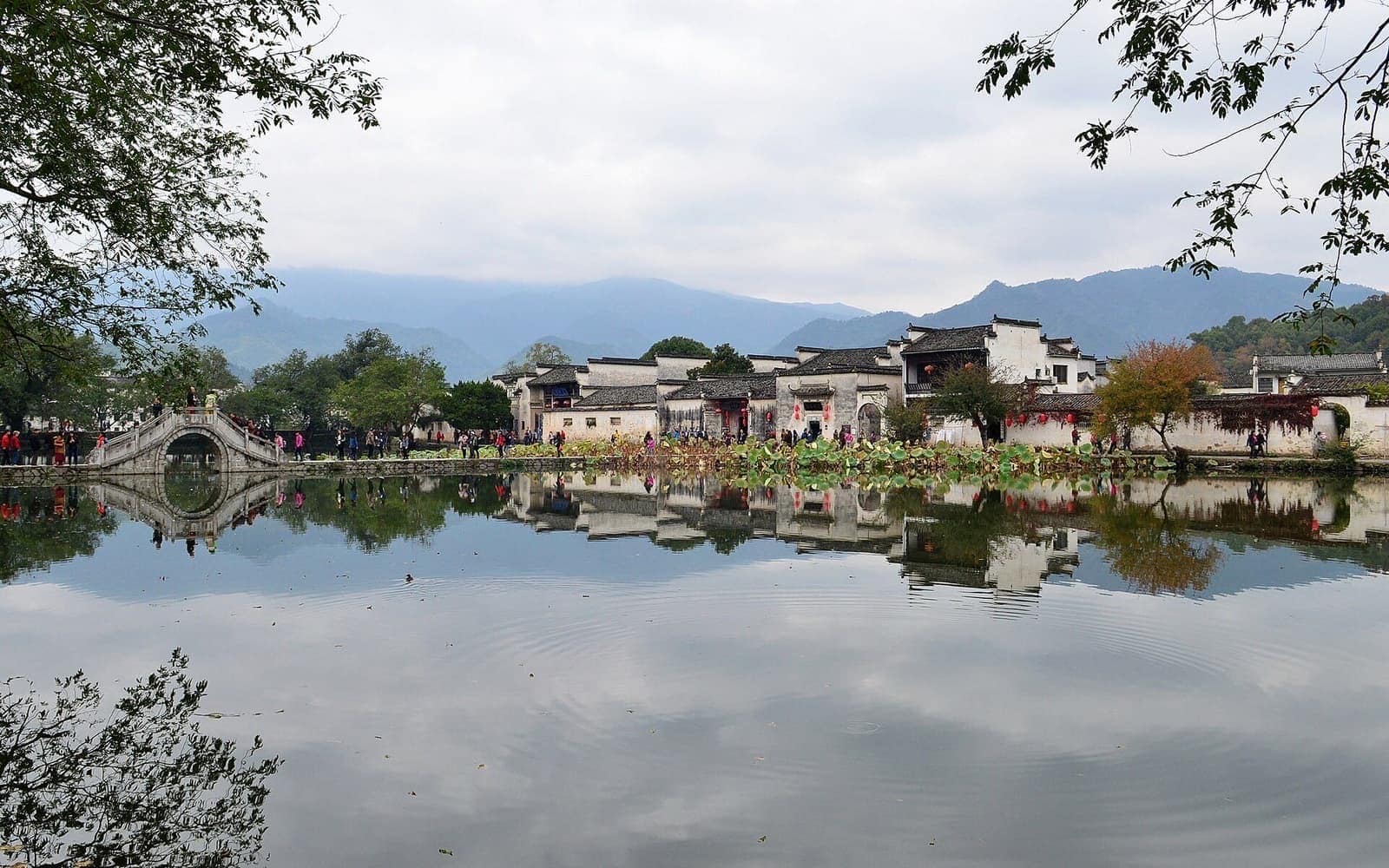
At the foot, Hongcun and Xidi are 45–60 minutes by road: whitewashed Huizhou houses, narrow lanes and reflective ponds, best before 09:00 when the tour groups arrive. Both are UNESCO sites and take two to three hours each. Weather is the wild card — mist creates the scenery and also hides it. Carry a rain shell, grippy shoes and a light fleece; the summit runs 8–10°C cooler than the valley. Anyone with knee trouble should take the cableway both ways and shorten the canyon loop.
Common questions
Can I visit Huangshan in one day?
Yes, but it is rushed: about five hours on the mountain, two cable cars and one short loop. You will see the Greeting Pine and one viewpoint, not the canyon or sunrise. If you have only a day, start at 07:00 and skip the summit hotel.
When is the best time to see the sea of clouds?
Late autumn and winter, roughly November to February, bring the clearest cloud inversions, though trails can ice over. Spring is green but wet; summer is hot and crowded; October is comfortable but very busy during Golden Week.
Official sources
- Ministry of Culture and Tourismscenic area ticketing and cable cars
Tours
Written and re-verified by our local team.